Perms and hair treatments in Oregon City, OR can add soft waves, defined curls, noticeable volume, or much-needed conditioning when the service is customized to your hair.
The word “perm” may still bring up visions of stiff, identical curls, but today’s texture services can look far more relaxed. Depending on the technique, rod size, placement, haircut, and natural hair pattern, a modern perm may create anything from breezy movement to springy curls.
Professional treatments have evolved too. Instead of treating every sign of dryness or damage with the same heavy mask, stylists can select conditioning and bond-supporting options according to what the hair has experienced.
The key is choosing a service based on your hair’s condition and your everyday routine—not simply following the latest transformation trend.
Why Modern Perms Are Trending Again
Low-maintenance texture is having a moment. Many people want hair that looks styled without requiring a curling iron every morning. A well-designed perm can create a foundation of movement that makes air-drying, diffusing, and quick styling easier.
Modern perms can be customized through:
- The size and shape of the rods
- The direction in which each section is wrapped
- The amount of hair placed around each rod
- The location of volume and curl
- The haircut supporting the finished texture
- The natural density and condition of the hair
That customization is what separates a current, wearable perm from the overly uniform versions people often remember. Larger rods may create looser movement, while smaller rods generally produce tighter curls. Strategic placement can add volume near the roots, movement through the ends, or texture throughout the entire style.
A Perm Changes More Than the Surface
A curling iron temporarily reshapes hair until moisture or shampoo interrupts the style. A perm creates a longer-lasting change by using a chemical process to restructure bonds within the hair and set it into a new formation.
Because the process affects the hair internally, a perm requires more consideration than an ordinary styling appointment. Previously lightened, frequently colored, fragile, or highly porous hair may react differently from untreated hair.
The American Academy of Dermatology’s perming guidance notes that chemical services can leave hair dry and brittle. It also advises immediately rinsing the solution and consulting a dermatologist if excessive burning or stinging occurs.
A responsible stylist will evaluate whether the hair can reasonably tolerate the service before beginning. Sometimes the best beauty decision is to improve the condition of the hair first and revisit the perm later.
What to Bring to a Perm Consultation
Inspiration photos are helpful, but choose several rather than relying on one perfectly styled image. Show examples of curls you like and examples you do not want. Your stylist can then identify patterns in your preferences.
Be honest about your hair history, including:
- Permanent or demi-permanent color
- Highlights, balayage, or bleach
- Previous perms, relaxers, or smoothing services
- Keratin or bond-building treatments
- At-home color and lightening products
- Frequent flat-ironing or curling
- Breakage, scalp sensitivity, or unusual shedding
Even when older color is no longer visible near the roots, it may remain in the lengths. That history can influence how evenly the hair processes and whether a perm is advisable.
Talk About Your Real Styling Routine
Do you have time to diffuse your hair, or do you prefer to let it air-dry? Are you willing to use curl products? Do you frequently pull your hair into a ponytail? These everyday details help the stylist design texture that fits your lifestyle.
A perm may reduce reliance on a hot curling tool, but it does not guarantee completely effortless hair. Most newly textured styles still benefit from the right cleanser, conditioner, leave-in product, drying technique, and occasional reshaping.
Luxury Perm or Standard Perm?
Service names can vary between salons, so avoid selecting a perm based only on the booking-menu label. A standard perm may be appropriate for a straightforward, all-over curl pattern, while a more customized or luxury option may allow for additional time, specialized placement, or a more detailed design.
Ask what is included, how much time the appointment requires, and which option suits your desired result. The stylist should also explain whether your reference photo is realistic for your current length, density, haircut, and natural texture.
Remember that the final effect depends on more than the chemical formula. Technique, sectioning, rod selection, processing, and finishing all matter.
Bond-Supporting Treatments Are Not Ordinary Conditioners
Bond-supporting products such as Olaplex and Smartbond are popular because chemical coloring, lightening, and texture services can affect the internal structure of the hair. These professional systems are designed to support hair during or after certain salon processes.
They are not interchangeable with moisture masks. A deep conditioner primarily supports qualities such as softness, flexibility, lubrication, and manageability. A bond-focused treatment has a different purpose and may be recommended when the hair has undergone chemical stress.
Neither option can make severely compromised hair brand new. Split ends cannot be permanently fused back together, and extensively damaged sections may ultimately need to be trimmed. Still, an appropriately selected treatment can improve how the hair feels and behaves.
When Deep Conditioning Makes More Sense
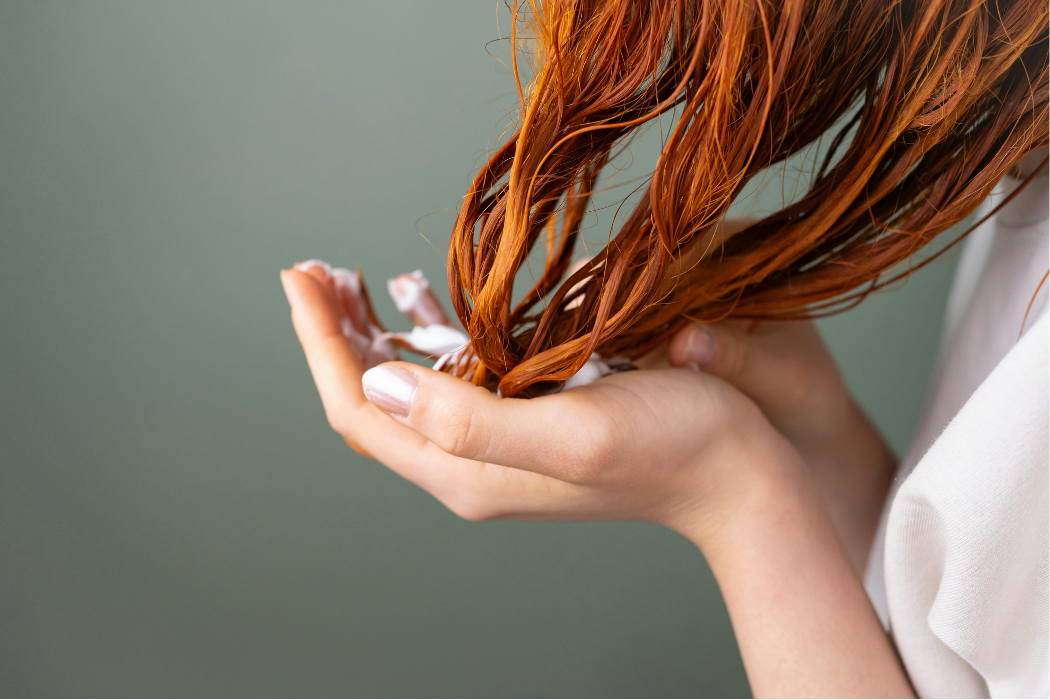
Hair that feels rough, dull, tangled, or difficult to style may benefit from deep conditioning. This is especially common after frequent heat styling, time in the sun, swimming, or exposure to dry weather.
A professional should consider whether the hair needs moisture, strengthening support, buildup removal, or a combination of services. Applying the richest possible mask is not always the answer. Fine hair can become flat or coated when a formula is too heavy, while coarse or highly porous hair may need more intensive conditioning.
The American Academy of Dermatology recommends using conditioner after washing and adapting its placement to hair type. Fine or straight hair may need conditioner concentrated on the ends, while dry or tightly curled hair may benefit from application through the full length.
A Treatment Cannot Fix Every Hair Concern
Salon treatments can improve the cosmetic look and feel of hair, but persistent scalp pain, sores, significant shedding, or sudden thinning deserves separate attention. These concerns may require evaluation by a healthcare professional rather than another conditioning appointment.
Likewise, hair that stretches excessively when wet, breaks with gentle handling, or feels gummy after chemical processing may not be ready for another major service.
The AAD’s hair-damage recommendations emphasize gentle handling, lower heat, and reduced tension. Supporting healthy-looking hair often requires adjusting daily habits in addition to scheduling professional treatments.
Be Thoughtful About Smoothing Services
Perms add or reshape texture, while smoothing services are intended to reduce curl, frizz, or volume. Although they appear together on many salon menus, the chemistry and results can be very different.
Before receiving any smoothing treatment, ask for the product name, expected longevity, aftercare requirements, and possible exposure concerns. The U.S. Food and Drug Administration explains that certain hair-smoothing products can release formaldehyde when heated, creating risks for clients and salon professionals.
The Occupational Safety and Health Administration also provides information about formaldehyde exposure in salons. Product labeling, proper professional use, and adequate ventilation matter.
This does not mean every smoothing service uses the same ingredients. It means clients should ask informed questions rather than assuming all products marketed as smoothing or “keratin” treatments are identical.
How to Care for a Fresh Perm
Your stylist’s instructions should take priority because timing can vary by formula. In general, freshly permed hair needs gentle treatment while the new texture settles.
Your aftercare plan may include:
- Waiting the recommended period before shampooing
- Avoiding tight ponytails, clips, or hats immediately afterward
- Using products designed for curls or chemically treated hair
- Detangling gently with fingers or a wide-tooth comb
- Blotting instead of rubbing with a towel
- Applying styling products while the hair is evenly damp
- Air-drying or using a diffuser at moderate heat
- Sleeping on a smooth pillowcase or protecting curls overnight
Avoid brushing dry curls aggressively, since this can separate the pattern and create frizz. If the finished texture looks different after the first wash, contact your stylist for guidance before trying to correct it with intense heat or at-home chemicals.
Protect Chemically Treated Hair From Extra Stress
Permed hair may become more vulnerable to dryness when combined with strong sunlight, hot tools, or repeated chemical services. Give the hair recovery time and follow the schedule recommended by your stylist before adding color or lightening.
The FDA’s hair-dye safety information recommends following product directions and completing instructed skin testing before coloring. Always disclose previous reactions to your stylist.
Additional habits that can help include lowering the temperature of hot tools, using heat protection, scheduling regular trims, and covering the hair during long periods outdoors. The goal is not to treat the hair as untouchable; it is to avoid layering unnecessary stress onto a chemical service.
Perms and Treatments at Ensemble Salon
Ensemble Salon provides customized texture and treatment services at 1400 Washington Street in Oregon City. Its confirmed menu includes Standard Perm and Luxury Perm options, along with Olaplex and Smartbond services and deep-conditioning treatments.
The salon emphasizes personalized consultations, giving stylists an opportunity to understand each guest’s hair, routine, preferences, and desired result. That conversation is particularly valuable before a perm because the healthiest and most flattering plan depends on the hair’s current condition.
The Best Hair Trend Is One You Can Maintain
A modern perm can deliver beachy movement, fuller curls, or extra body, while a professional treatment can help dry or chemically stressed hair feel more manageable. Neither service should be selected from a trend photo alone.
Start with an honest consultation, disclose your complete chemical history, and ask what daily maintenance the result will require. When the service matches both your hair and your lifestyle, beautiful texture becomes much easier to enjoy long after you leave the salon.