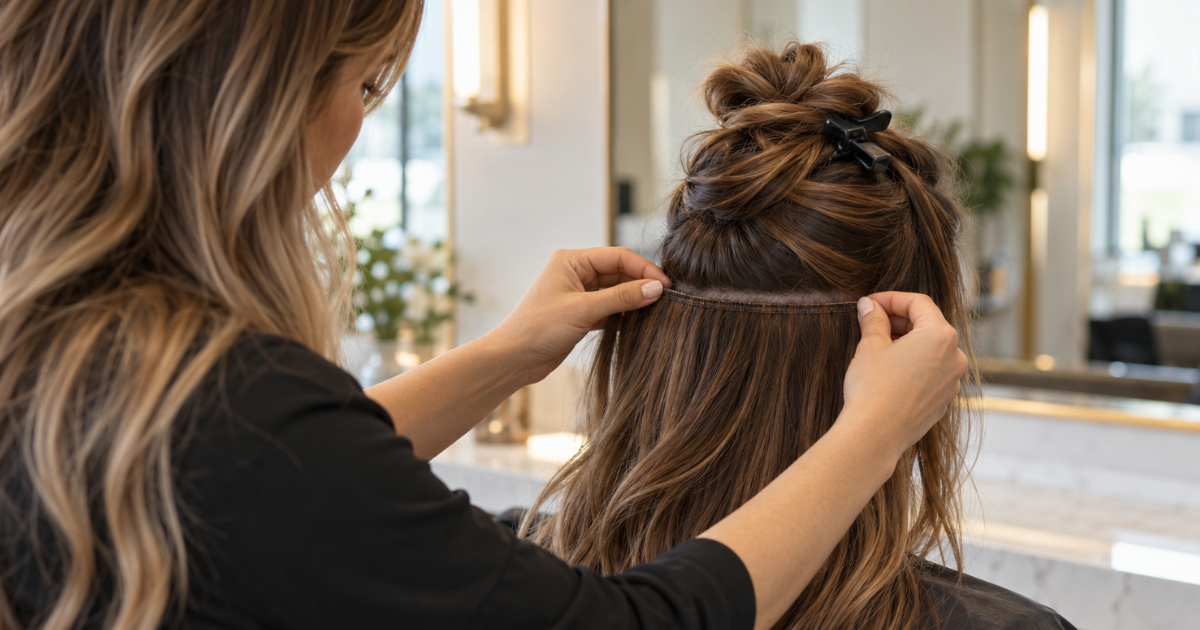
Hair Extensions in Greene: More Volume, Your Way
The best hair extensions in Greene, ME should do more than add inches—they should complement your natural texture, support your styling goals, and fit comfortably…

An Optometrist may not be the first expert who comes to mind when planning a new makeup look, but eye health should be part of every beauty routine involving mascara, contact lenses, lash extensions, or shimmering shadow.
Eye trends move quickly. One week, everyone is recreating a smoky waterline; the next, metallic pigments, dramatic extensions, and colored contacts dominate beauty feeds. Experimenting is part of the fun, but the skin around the eyes is delicate, and products used too close to the eye can cause more than a disappointing makeup day.
The goal is not to abandon bold looks. It is to enjoy them without turning irritation, contamination, or blurry vision into an expected part of getting ready.
If you wear contacts, begin with clean, dry hands and insert the lenses before applying skincare or makeup. This reduces the chance of transferring moisturizer, powder, oil, or pigment onto a lens while handling it.
The Centers for Disease Control and Prevention explains that contact lenses are medical devices and must be worn, cleaned, and stored correctly to reduce the risk of infection.
Once the lenses are comfortable, continue with your normal beauty routine. At the end of the day, reverse the order: wash and dry your hands, remove the contacts, and then dissolve eye makeup.
Never rinse lenses with tap water or rewet them with saliva. Follow the cleaning system and replacement schedule recommended for your specific lenses.
Tightlining creates definition by placing eyeliner along the inner edge of the eyelid. It can look beautifully subtle, but it also positions the product close to the tear film and the glands that help maintain a stable ocular surface.
If tightlining repeatedly leaves your eyes watery, blurry, gritty, or red, move the eyeliner slightly farther away from the inner lid margin. A soft line between the lashes can still create depth without placing as much product against the eye.
The American Academy of Ophthalmology’s eye makeup guidance recommends keeping cosmetics outside the lash line and avoiding products that irritate the eyes.
Sharpen pencils regularly with a clean sharpener, replace dried-out formulas, and stop using any product that has developed an unusual smell, texture, or color.
Glittery lids can be gorgeous, but not every shiny craft material belongs near the eyes. Use products specifically labeled for cosmetic application in the eye area, and read the package instructions rather than assuming every pigment in a beauty palette is approved for every location.
Loose particles can migrate during application or removal. Apply shimmer with controlled, pressing motions instead of sweeping it aggressively across the lid. A suitable cosmetic base may help reduce fallout, but it cannot make a product intended for another purpose eye-safe.
The FDA’s eye cosmetic safety information advises consumers to use only cosmetics intended for the eye area and to stop using a product immediately if irritation occurs.
If glitter enters the eye, avoid rubbing. Remove contact lenses if you can do so comfortably and rinse according to professional guidance. Persistent pain, light sensitivity, redness, or blurred vision deserves prompt evaluation.
Sharing lipstick may feel harmless among close friends, but eye products deserve stricter boundaries. Mascara wands, liquid liners, cream shadows, and lash tools can collect microorganisms during ordinary use.
Keep these products personal:
Store cosmetics closed and away from excessive heat or moisture. Clean reusable brushes regularly and allow them to dry completely before placing them in a closed container.
If you develop an eye infection, discard products used around the affected eye rather than saving them for later. The FDA provides additional answers about product safety, reactions, and labeling in its eye cosmetics safety questions and answers.
Lash extensions can create definition without daily mascara, but their appearance should not distract from application hygiene, adhesive sensitivity, or eyelid comfort.
Before committing, ask the technician about sanitation practices, adhesive ingredients, aftercare, and what to do if a reaction develops. Eyes should remain closed during application, and adhesive should not contact the skin or ocular surface.
The American Academy of Ophthalmology’s eyelash extension guidance discusses possible concerns such as allergic reactions, eyelid swelling, infection, and damage to natural lashes.
Seek medical advice if you experience significant swelling, pain, discharge, persistent redness, or a change in vision. Trying to tolerate a worsening reaction for the sake of preserving a new lash set is never worth the risk.
Decorative contact lenses can transform an entire look, whether the goal is a subtle color shift or an elaborate costume. Even lenses without vision correction still sit directly on the eye and require an appropriate prescription and fit.
Do not buy costume contacts from beauty stores, online marketplaces, novelty shops, or sellers that do not require a prescription. A lens that fits one person may not fit another, and an incorrect fit can damage the eye.
The FDA’s decorative contact lens guidance warns against purchasing these products without an examination and valid prescription.
Never trade colored lenses with a friend, layer them over regular contacts, or sleep in them unless your eye care professional has specifically approved overnight wear for that product. Beauty should change the appearance of the eyes, not compromise their health.
Flaking mascara, loose powder, strong removers, contact lens wear, long screen sessions, and eyelid inflammation can make an already sensitive eye area feel worse. Ironically, watery eyes may also be associated with dryness because irritation can trigger reflex tearing.
Avoid assuming that every uncomfortable eye simply needs a random lubricating drop. Different problems can produce similar symptoms, and some redness-relieving products are not intended to address the underlying cause.
Track useful details before seeking care:
That information can help distinguish a cosmetic reaction from dryness, contact lens trouble, eyelid inflammation, or another concern.
A dramatic eye look should not require an equally dramatic removal process. Saturate a clean pad with an eye-appropriate remover, hold it gently against the closed lid, and allow the product time to dissolve. Wiping repeatedly with force can irritate the eyelid skin and pull on the lashes.
Use a fresh section of the pad as pigment lifts. Avoid pushing remover directly into the eye, and cleanse away residue without scraping along the lid margin.
Waterproof formulas are useful for humid days and emotional events, but they may require more effort to remove. If daily removal leaves the eye area sore, consider reserving waterproof mascara for occasions when its durability is genuinely needed.
Makeup should be postponed when the eye is painful, unusually red, swollen, producing discharge, or sensitive to light. Covering symptoms with concealer or adding another product can introduce contaminants and make it harder to determine what caused the problem.
Sudden vision loss, a curtain-like shadow, a rapid increase in flashes or floaters, severe pain, chemical exposure, or an eye injury requires urgent professional attention. Cosmetic irritation should also be evaluated when symptoms persist after the product is removed.
Luminary Eye Care serves Marietta and East Cobb with comprehensive eye examinations, contact lens fittings, dry eye care, pediatric services, and urgent eye evaluations. These services can help patients understand how vision correction, ocular comfort, and daily beauty habits interact.
Bring your contacts, current glasses, and a list or photo of products associated with recurring irritation to your visit. Specific information gives the doctor a clearer picture than simply saying that makeup makes your eyes uncomfortable.
Eye-safe beauty is not about choosing between creativity and caution. It is about understanding where products belong, keeping tools hygienic, respecting contact lenses, and noticing when the eyes need a break. With a few smarter habits, bold liner, colorful shadow, dramatic lashes, and polished brows can remain exactly what they should be: enjoyable forms of self-expression.