Hair Extensions in Greene: More Volume, Your Way
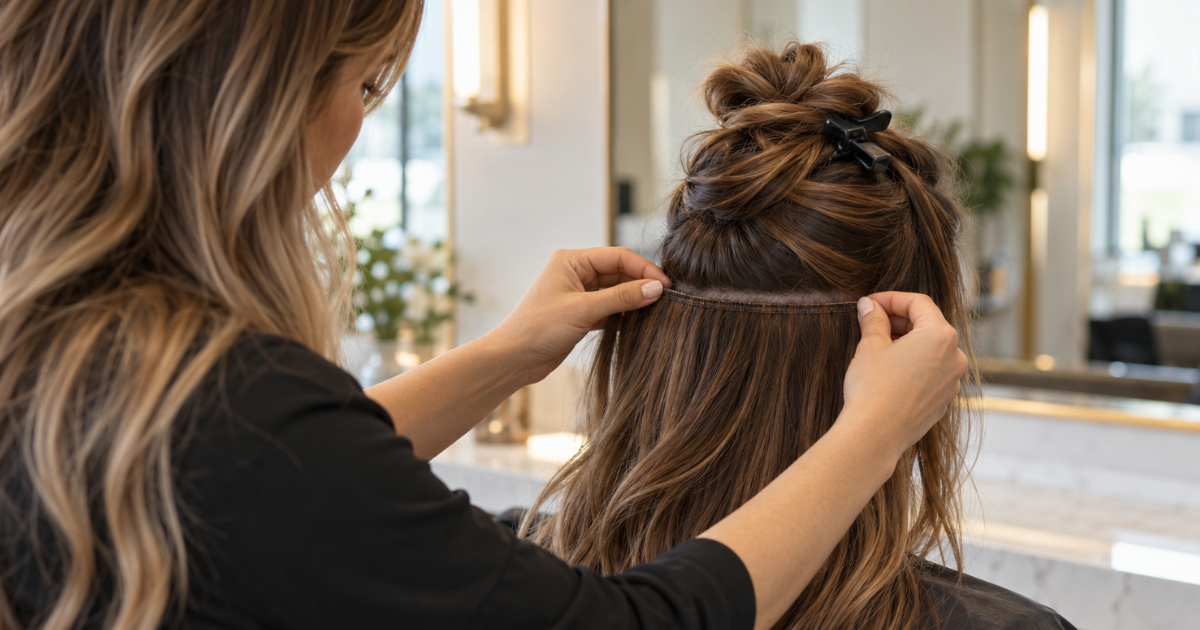
The best hair extensions in Greene, ME should do more than add inches—they should complement your natural texture, support your styling goals, and fit comfortably…

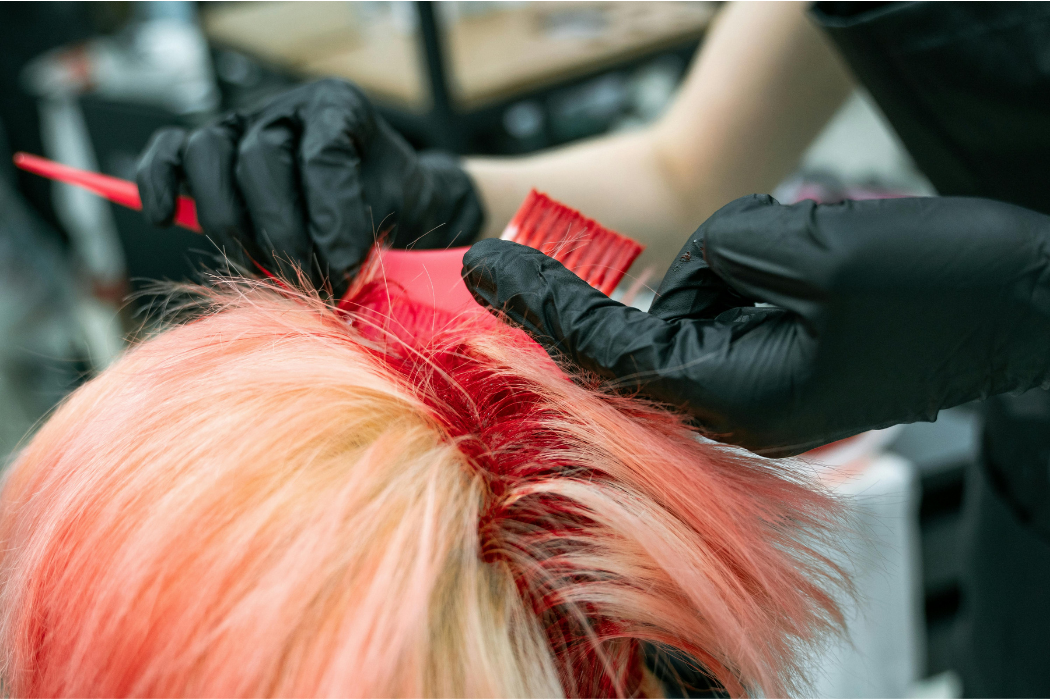
Custom hair color should look beautiful beyond the salon mirror, whether you are standing in morning sunlight, working beneath office lights, or taking a photo at dinner.
Most of us have experienced the mystery. A brunette looks rich and neutral indoors, then reveals warm ribbons outside. A blonde appears creamy in one bathroom and almost silver in another. Red can shift from subtle cinnamon to vivid copper before you have even changed your outfit.
This does not necessarily mean the color changed. Often, the light did. Understanding that simple fact can make inspiration photos easier to interpret, consultations more productive, and the final result more satisfying in real life.
We see color when light interacts with a surface and reaches our eyes. The Harvard and Smithsonian Spectrum Lab explains that the mix of wavelengths reaching the eye helps determine the color we perceive. Change the light source, and the same hair can appear different.
Warm household bulbs may emphasize gold, copper, and red. Cooler lighting can make ash tones look more noticeable. Bright daylight usually reveals more variation and dimension than a dim room. Phone cameras add another layer because exposure, white balance, portrait modes, and automatic processing can alter the image.
The National Institute of Standards and Technology’s explanation of color rendering shows why the appearance of objects under artificial illumination is an important quality of a light source. In beauty terms, this is why judging a shade under only one lamp gives you an incomplete story.
After a color service, look at your hair in three ordinary environments:
Hair-color names are wonderfully expressive and hilariously imprecise. “Cherry mocha,” “champagne brunette,” and “amber glow” create an instant mood, but they are not standardized formulas. One person’s chocolate brown may be another person’s deepest blonde.
Vogue’s 2026 hair-color trend report highlights warmer, deeper, and more natural-looking interpretations of blonde, brunette, red, and black. The larger lesson is not that everyone needs a trending shade. It is that modern color is often built from several subtle decisions rather than one flat label.
When you save a reference photo, identify what you actually like:
These details give a colorist more useful information than a trendy name alone.
A reference photo shows the destination, not the route. Your natural level, existing artificial color, gray pattern, texture, density, condition, and previous chemical services all influence what can reasonably happen next.
Share your complete color history, including professional services, home dye, lightener, henna, direct dyes, smoothing treatments, and any recent attempts to remove color. Even a shade applied months ago may remain through the mid-lengths and ends. That history can affect how evenly hair lifts or accepts a new tone.
It is also helpful to separate your immediate goal from your long-term goal. You may want to become much lighter eventually while choosing a softer first step that preserves condition and creates a wearable result between sessions.
A great color plan includes the future root line. Some guests enjoy a crisp, polished result and are comfortable refreshing visible regrowth regularly. Others want dimension that becomes softer as it grows.
The choice affects placement and technique. Brightness positioned close to the scalp creates a different grow-out from a deeper root with lightness through the middle and ends. Gray coverage and gray blending also serve different goals. Coverage aims for a more uniform result, while blending may allow natural silver to remain part of the overall design.
Before coloring begins, ask:
There is no correct maintenance schedule for everyone. The right design is the one that matches both your visual goal and your willingness to maintain it.
Going darker and going lighter are not equal processes. Lightening removes or alters existing pigment and may require a gradual approach, especially when the desired result is far from the starting level or the hair has previous color.
The American Academy of Dermatology’s guidance on coloring hair notes that lifting more than three shades generally requires stronger peroxide and can cause more damage. A staged transformation is not a failure to reach the goal. It may be the most responsible route toward it.
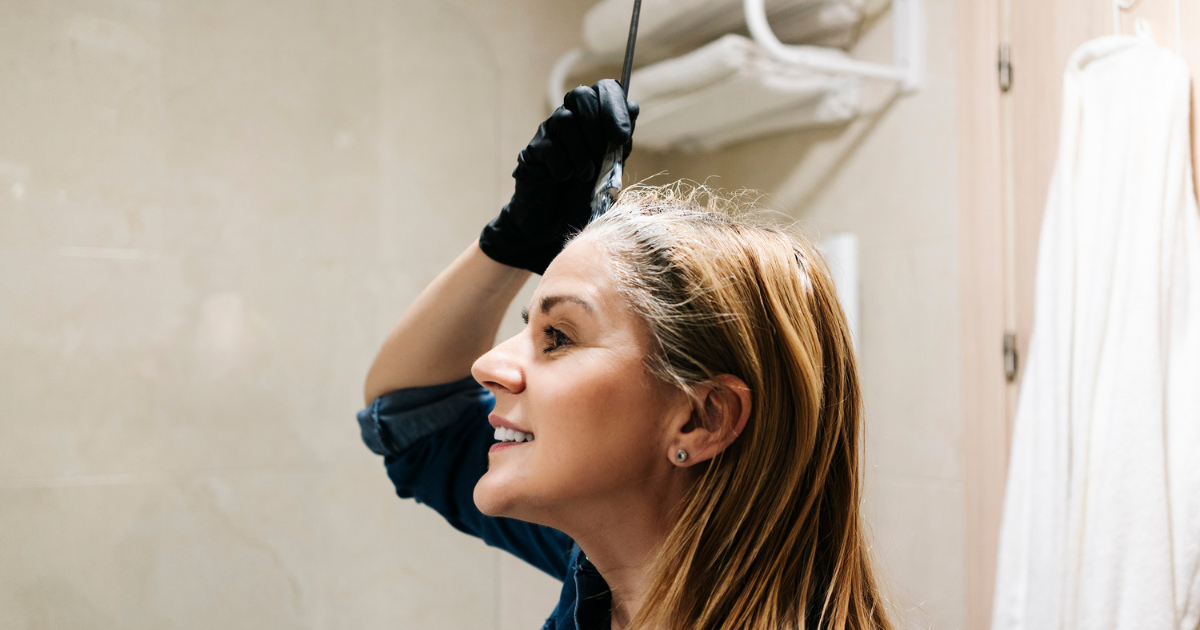
Safety matters as much as the shade. The U.S. Food and Drug Administration’s hair-dye guidance advises following product directions and warnings, performing the recommended patch test each time, wearing gloves for home application, and never mixing different dye products. Tell your colorist about previous reactions, scalp sensitivity, or current irritation before a service begins.
Color maintenance does not need to become a full-time hobby, but a few environmental factors deserve attention.
The AAD notes that sunlight can leave colored or chemically treated hair looking faded, dry, and brittle. A hat offers practical protection for both hair and scalp. The Environmental Protection Agency’s UV guidance also recommends limiting intense midday exposure, seeking shade, and using protective clothing as part of a broader sun-safety routine.
Water is not chemically identical from place to place. The U.S. Geological Survey explains that hardness largely reflects dissolved calcium and magnesium. If your hair feels different after moving, traveling, or changing water sources, mention it to your stylist rather than adding several corrective products at once.
Research on the topic is still limited, but one small study indexed by the National Library of Medicine found reduced tensile strength in hair samples treated with hard water compared with deionized water. That does not mean hard water explains every case of dryness or breakage. It does support taking changes in water exposure seriously when evaluating a routine.
Repeated high heat can work against the glossy finish people want from fresh color. Use a suitable heat protectant, choose the lowest effective tool temperature, and avoid passing over the same section unnecessarily. When possible, ask your stylist to demonstrate a lower-effort finish that works with your natural texture.
If you are documenting your color or sending a photo to your stylist, make the image useful. Stand near a window in indirect daylight, turn off strong overhead bulbs, and avoid beauty filters. Photograph the front, both sides, and back at a similar distance.
For before-and-after comparisons, use the same location and lighting. A warmer bulb or different camera setting can create an apparent color change that is not visible under consistent conditions.
Centre Salons and Spas provides hair-color services at its Arvada, Westminster, and Tiffany Plaza locations in Colorado. Its published menu includes all-over single color, root touch-ups, shine and gloss services, mini and full dimensional color, balayage, color melting, fashion shades, corrective work, first-time blonding, and gray blending.
The salon states that advanced transformations may require multiple sessions to protect hair integrity. Its process begins with a consultation that considers hair goals, lifestyle, maintenance preferences, length, density, history, and desired result. Centre also uses Salon Scale technology to measure the amount of color product used, supporting a more individualized quote.
That approach reflects what thoughtful color should be: not a shade selected in isolation, but a plan connecting the desired appearance with the hair’s starting condition, the work required, and the guest’s future routine.
The most wearable hair color is not simply the prettiest swatch. It is a shade designed for your features, starting point, everyday lighting, maintenance habits, and future plans. When those pieces are considered together, the color is far more likely to feel like you in every mirror.