Hair Extensions in Greene: More Volume, Your Way
The best hair extensions in Greene, ME should do more than add inches—they should complement your natural texture, support your styling goals, and fit comfortably…

The best hair extensions in Greene, ME should do more than add inches—they should complement your natural texture, support your styling goals, and fit comfortably into your everyday routine. Whether you want fuller ends, longer layers, dimensional color, or a non-surgical option for thinning hair, the right transformation begins with a personalized consultation.
Extensions have moved far beyond the obvious, extra-long looks many people still imagine. Today’s most wearable results can be surprisingly subtle. A stylist may use extensions to fill sparse areas, balance the shape of a haircut, add volume around the sides, or create brighter color without lightening every strand of natural hair.
It is easy to arrive at a salon with a photo of long, glamorous hair. It is more useful to identify what you actually like about that image. Is it the length, density, color, movement, or overall shape?
Common extension goals include:
Your ideal result should also make sense for your current hair. Natural density, texture, length, condition, and previous chemical services all influence what can be achieved comfortably.
A professional consultation is not just an extra step before installation. It is where the stylist determines which method, amount of hair, placement pattern, color blend, and maintenance plan may suit you.
Elite Body Essentials offers complimentary extension consultations. During the appointment, an extension specialist can evaluate your hair type, texture, length, and desired result. This is also the time to discuss how frequently you wash, exercise, swim, travel, or use hot tools.
Be honest about how much maintenance you can manage. Extensions should enhance your routine, but they require consistent care. If you prefer quick mornings and minimal styling, tell your stylist. If you enjoy creating waves, braids, and updos, bring photos of those looks so the placement can be planned accordingly.
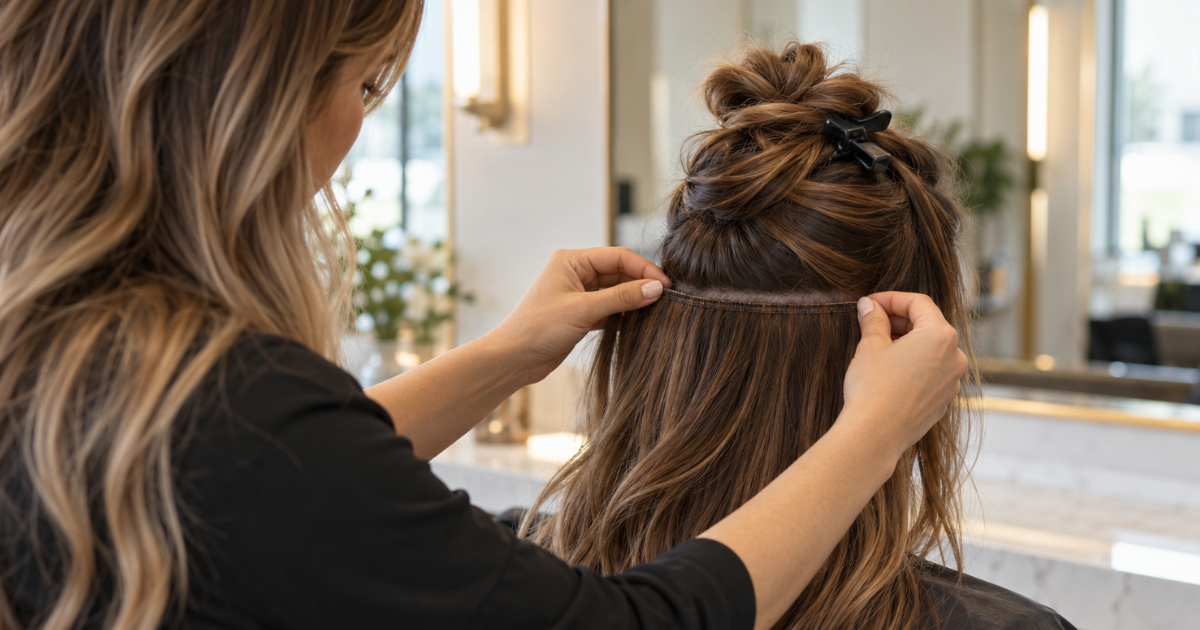
Hand-tied extensions use wefts of hair attached to a beaded foundation and sewn into place. At Elite Body Essentials, each placement is customized to the guest’s head shape to create balanced volume and consistent tension.
This method can be a strong option for someone seeking fuller, more dramatic results. Since the wefts create continuous sections of hair, they can build substantial density while maintaining movement through the lengths.
Placement matters. A stylist must consider where you part your hair, how high you wear ponytails, and which sections need the most volume. Proper customization helps the extensions blend into common hairstyles rather than forcing you to wear the same look every day.
Hand-tied extensions require scheduled maintenance as natural hair grows. The wefts need to be moved up and reassessed so they continue to sit securely and comfortably.
Tape-in extensions use thin, pre-taped wefts placed around sections of natural hair. Their flatter attachment can create a smooth, discreet result, making them a popular choice for guests with finer hair.
The method also allows color and volume to be placed strategically. A stylist can use several shades to reproduce the natural dimension of highlighted or balayaged hair rather than relying on one flat color.
Tape-ins need careful product placement. Oils, heavy conditioners, and certain styling products can interfere with the adhesive when applied near the attachment points. Freshly installed tape-ins also need time to set, so guests should follow their stylist’s instructions about washing, moisture, and exercise immediately after an appointment.
As natural hair grows, tape-ins are professionally removed, cleaned, retaped, and repositioned when the extension hair remains suitable for reuse.
Not everyone considering added hair is looking for dramatic length. Some people are concerned about thinning, reduced density, or visible areas that standard extensions may not address effectively.
Elite Body Essentials also offers non-surgical hair replacement. This non-invasive option is designed for individuals who want to improve the appearance of volume without surgery.
Hair loss and thinning can have many causes, including genetics, hormonal changes, medical conditions, medications, stress, and styling practices. A salon professional can discuss cosmetic hair solutions, but sudden or unexplained hair loss should also be evaluated by a qualified healthcare professional or dermatologist.
Natural hair is rarely one solid shade. Even dark brunette hair may contain warmer ends, cooler roots, and subtle variation around the face. Blondes can include several levels of brightness and dimension.
A convincing extension blend may require multiple colors. Stylists can combine shades to complement highlights, lowlights, balayage, or natural variation. The placement of each tone matters because the goal is to recreate the movement of the existing color.
Texture and haircutting are equally important. Extensions that match the color but do not blend with the haircut may still look disconnected. After installation, shaping and soft layering can integrate the natural hair with the added length and fullness.
A new installation may feel different because additional hair has been added. Persistent pain, headaches, sores, or intense pulling are not signs that the extensions are “working.” They can indicate excessive tension or another issue that needs attention.
The American Academy of Dermatology recommends working with a professional stylist and speaking up if extensions feel painful or overly tight. Repeated pulling can contribute to breakage and traction alopecia, a form of hair loss associated with ongoing tension.
If something feels wrong after installation, contact your stylist promptly. Elite Body Essentials encourages extension guests to stop, take a clear photo or video of the concern, and send it to their stylist for guidance.
Extension hair needs consistent moisture and gentle handling because it does not receive natural scalp oils in the same way as growing hair. The goal is to keep the lengths soft while protecting the attachment points from buildup, pulling, and excess moisture.
Use an extension-safe brush and support the hair near the attachments while detangling. Begin at the ends and gradually work upward. Make sure you are brushing the inner layers, not just smoothing the surface.
Your stylist should recommend products appropriate for your installation method. Clean the scalp carefully without aggressively scrubbing, twisting, or piling the hair on top of the head. Hand-tied and tape-in methods may require different washing techniques, so follow method-specific instructions.
Apply conditioner or leave-in moisture mainly through the mid-lengths and ends. Avoid saturating attachment areas with oils or heavy products unless your stylist specifically approves them.
Do not leave wefts, tapes, or roots damp for long periods. Moisture around attachment points may contribute to slipping, tangling, or other maintenance problems. Use controlled airflow and avoid pulling aggressively with the brush.
Go to bed with completely dry, detangled hair. A loose braid or gently secured style can reduce movement and matting. A silk or satin pillowcase may also reduce friction.
Extensions can hold curls and waves beautifully, which means you may not need to restyle them at high temperatures every day. Always use heat protection, select the lowest effective temperature, and avoid placing hot tools directly against tapes, beads, tracks, or other attachment points.
Heat-free styling can be helpful between wash days. Loose braids, soft rollers, and gentle overnight techniques can create movement without repeated exposure to high temperatures—just make sure the hair is fully dry first.
Pool water, salt water, minerals, sunscreen, and sun exposure can affect both natural and extension hair. Light-colored extensions may be especially vulnerable to discoloration.
Before swimming, ask your stylist for instructions specific to your method. Elite Body Essentials recommends applying leave-in conditioner from the mid-lengths to the ends and securing the hair. After swimming, rinse the hair and dry the roots and attachment areas thoroughly.
Some chemical sunscreen ingredients can transfer onto light extension hair and create unwanted tones. Keep sunscreen away from the lengths whenever possible and ask your stylist which products are less likely to affect the color.
Natural hair continues growing and shedding while extensions are installed. As the attachment points move away from the scalp, they need professional repositioning. Shed natural strands can also become trapped near the attachments and must be managed during maintenance.
Prebooking is helpful because extension appointments require dedicated time. Staying on schedule can reduce tangling, slipping, and unnecessary stress on the natural hair. It also gives your stylist a chance to assess the condition of the extensions and adjust the plan when needed.
Professional removal is just as important as professional installation. Pulling out tapes, beads, or sewn-in wefts at home can cause avoidable breakage.
A successful extension service should not erase your personal style. It should amplify what you already love or provide a thoughtful solution for something you want to change.
Elite Body Essentials offers hand-tied extensions, tape-in extensions, and non-surgical hair replacement at its salon in Greene, serving guests from Lewiston, Auburn, Augusta, and surrounding Central Maine communities. By beginning with a personalized consultation and following a consistent maintenance plan, guests can choose an option designed around their hair and lifestyle.
More length can be exciting, but the real luxury is a result that feels comfortable, blends beautifully, and gives you more ways to wear your hair with confidence.