Hair Extensions in Greene: More Volume, Your Way
The best hair extensions in Greene, ME should do more than add inches—they should complement your natural texture, support your styling goals, and fit comfortably…

Hair extensions in Savannah GA can add beautiful length, natural-looking volume, and fresh dimension, but the best results begin with choosing a method that complements your natural hair and daily routine.
Modern extensions are no longer limited to dramatic, waist-length transformations. Today’s beauty trends focus on customization. Some clients want a fuller ponytail, others want extra density around the sides, and many simply want their hair to hold curls or a voluminous blowout more easily.
A properly planned extension service should consider much more than the finished length. Natural texture, hair density, color, head shape, styling habits, and maintenance preferences all influence which option will look and feel the most natural.
A consultation is the planning stage of an extension transformation. It allows the stylist to evaluate the natural hair, understand the client’s expectations, and recommend a method that supports both the desired appearance and the health of the hair.
During a professional extension consultation, the stylist may evaluate:
Color matching also requires careful attention. Natural hair rarely contains only one flat shade. It may include highlights, lowlights, warmth, cooler pieces, or softly faded ends. Combining complementary extension colors can create a more dimensional and believable blend.
Extension systems work in different ways. Some are professionally installed and worn continuously between maintenance appointments, while others can be applied and removed at home. Understanding these differences makes it easier to select an option that fits your lifestyle.
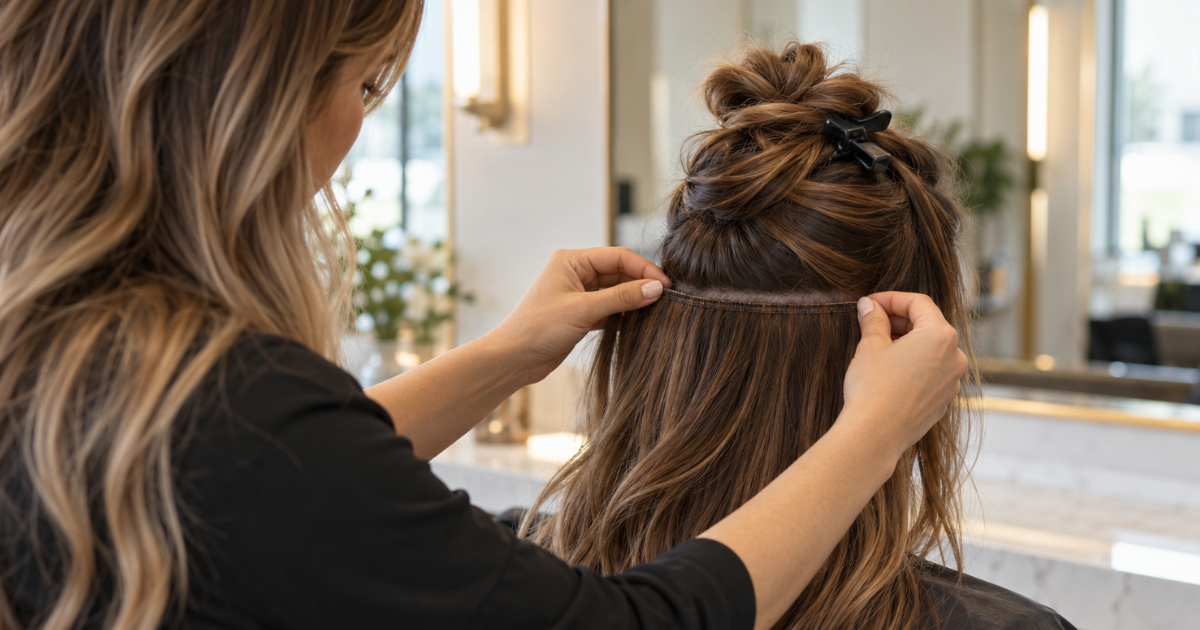
Hand-tied extensions use rows of weft hair attached to the natural hair with beads and thread. A stylist can customize the placement of each row according to the client’s head shape, density, and desired coverage.
This method may appeal to clients who want:
Careful installation is essential. Extensions should feel secure, but they should not create persistent pain or headaches. The American Academy of Dermatology recommends telling the stylist immediately if extensions feel painful or excessively tight because repeated pulling can contribute to breakage and hair loss.
A halo extension offers a different type of flexibility. Instead of being sewn or bonded to the natural hair, the extension is supported by a discreet wire that sits around the head. The natural hair is arranged over the extension to conceal it and create a seamless appearance.
This option can be attractive to someone who wants instant length and volume without committing to a permanent installation. It may also work well for clients who enjoy changing their look for weddings, photographs, vacations, date nights, or other special occasions.
Because a halo can be removed before sleeping, exercising, or washing the natural hair, its care routine differs from that of a hand-tied installation. However, it still requires gentle brushing, proper washing, careful storage, and accurate color matching.
The right extension method depends on how frequently the extensions will be worn and how much maintenance the client wants to manage.
Hand-tied extensions may be a better fit for someone who wants consistent length and volume every day and is comfortable returning to the salon for scheduled maintenance. Halo extensions may be more practical for someone who prefers a removable transformation that can be worn only when desired.
At Roots Southern Salon, clients can explore both hand-tied and HaloCouture extensions. The Savannah salon requires a consultation before every extension service so an extension-certified stylist can recommend a customized solution based on the client’s natural hair and personal goals.
The salon also orders the extension hair for the client. The final cost depends on factors such as the selected method, length, color, weight, and installation requirements. This personalized process helps avoid choosing extension hair that is too heavy, poorly matched, or unsuitable for the natural hair.
Beautiful extensions should never come at the expense of scalp comfort. Repeated pulling can contribute to traction alopecia, a form of hair loss associated with prolonged tension. The Cleveland Clinic explains that warning signs may include tenderness, itching, redness, broken hairs, or thinning in areas exposed to repeated pulling.
The American Academy of Dermatology’s guidance on tight hairstyles also emphasizes the importance of recognizing discomfort early. If an installed row produces unusual soreness, bumps, or ongoing tightness, contact the stylist instead of waiting for the problem to disappear.
Anyone already experiencing unexplained shedding or thinning should consider consulting a qualified medical professional before installing extensions. MedlinePlus provides helpful information about common causes of hair loss and when a medical evaluation may be appropriate.
Extensions can remain softer, shinier, and easier to style when they receive consistent care. Always follow the instructions provided by the extension stylist because product and maintenance recommendations can vary according to the method used.
Use an extension-friendly brush and begin detangling at the ends. Gradually work upward instead of dragging the brush directly from the roots. With installed extensions, support the attachment area with one hand while brushing to reduce unnecessary pulling.
Oil, sweat, and styling-product residue can collect around extension rows. Clean the scalp gently without aggressively rubbing, twisting, or bunching the hair. Rinse thoroughly and make sure the attachment areas dry completely.
The AAD’s healthy hair recommendations include concentrating shampoo on the scalp and using conditioner after washing. An extension stylist can explain where conditioner, masks, oils, and leave-in products should be applied so they do not interfere with beads or attachment points.
Avoid sleeping with soaking-wet extensions. Once the hair is completely dry, place it in a loose braid or low ponytail to reduce tangling. Sleeping on a silk or satin pillowcase may also help minimize friction and preserve the finished style.
Many extensions can be curled or straightened, but excessive heat can dry out the hair and shorten its usable life. Apply a stylist-approved heat protectant and use the lowest effective temperature. Keep hot tools away from beads, threads, wires, and other attachment areas.
Savannah’s warm, humid weather can encourage frizz and tangling, especially during outdoor events or coastal trips. Lightweight anti-humidity products may help, but heavy oils should be used cautiously near extension attachment points.
Swimming also requires planning. Chlorine and salt water can leave extension hair feeling dry or tangled. Allure’s summer extension care guide recommends securing the hair before swimming, washing gently, and using products formulated for extensions. Clients should ask their stylist for instructions specific to their installation method before visiting the beach or pool.
Even premium extension hair can become difficult to manage when the installation or aftercare routine does not match the client’s needs. Avoiding a few common mistakes can make the overall experience much more enjoyable.
Maintenance appointments are part of the extension process, not an optional extra. As natural hair grows, professionally installed rows need to be repositioned. Waiting too long may make the extensions harder to manage and can increase tangling near the scalp.
Bring inspiration photos to the consultation, but remain open to recommendations based on your natural hair. Helpful questions include:
It is also reasonable to confirm that the professional performing the service has appropriate training and licensing. Consumers can consult the Georgia State Board of Cosmetology and Barbers for licensing information and public resources.
The most popular extension method is not automatically the right method for every client. Hand-tied extensions can make sense for someone who wants ongoing fullness and is prepared for professional maintenance. A halo may be better suited to someone who wants removable length for selected days or special occasions.
The beauty of modern extensions is their versatility. They can create dramatic length, improve the shape of a haircut, fill in fine ends, or make everyday styling feel more effortless. When the color, weight, placement, and maintenance routine are personalized, the finished result can feel less like an added accessory and more like an elevated version of the client’s natural hair.