Hair Extensions in Greene: More Volume, Your Way
The best hair extensions in Greene, ME should do more than add inches—they should complement your natural texture, support your styling goals, and fit comfortably…


A Hair salon can help translate the looks filling your inspiration folder into a cut, color, or style that works beyond the camera.
Hair trends are fun because they invite change. A glossy copper shade can make familiar layers feel new, while a shorter fringe or sculpted bob can completely shift the mood of a look. The tricky part is that an image does not reveal the model’s natural texture, styling routine, color history, or time spent getting ready.
The goal is not to avoid trends. It is to borrow the right elements and turn them into something flattering, manageable, and genuinely personal.
Social feeds constantly rotate through butterfly layers, micro bobs, curtain bangs, glassy blowouts, dimensional brunettes, bold coppers, and expensive-looking blondes. These labels are useful starting points, but they do not describe one universal result.
“Curtain bangs,” for example, could mean cheekbone-length pieces that blend into long layers or a heavier fringe sitting much closer to the eyes. A copper shade could be soft strawberry, bright orange, muted auburn, or deep cinnamon.
Instead of asking for an exact copy, identify what attracts you to the image:
This gives a stylist room to preserve the feeling of the trend while adapting its proportions to your hair.
A good trend decision begins with a realistic description of your routine. You may love a high-volume blowout but prefer to air-dry most mornings. You might be drawn to a pale blonde while having limited time for toning, conditioning treatments, and frequent root maintenance.
Before making a change, consider four practical factors.
Texture, density, growth patterns, length, and previous chemical services influence how a style behaves. Fine waves may respond differently from dense curls, even when both clients request the same layered shape.
Be honest about how frequently you use a dryer, iron, curling tool, or diffuser. The American Academy of Dermatology recommends gentle handling and limited heat to help reduce damage. If a look requires daily high-temperature styling, ask for a version that works with less effort.
Some cuts need reshaping sooner than others. Certain colors require toners, root services, specialized products, or protection from fading. Ask what the look may resemble after six, eight, or twelve weeks, not only how it will appear on the first day.
Consider work expectations, exercise, travel, weather, and how frequently you wear your hair up. A fringe that looks effortless in a photograph may feel less convenient during daily workouts or a humid commute.
The most wearable haircut trends create a useful shape before styling begins. Layers can encourage movement, remove weight, or build volume, but their placement matters. Too many short layers can produce unwanted expansion in dense hair, while overly aggressive layering may make fine ends appear thinner.
A stylist may adjust a trending cut by changing:
Bring photographs of looks you like, but also bring one or two images showing what you do not want. Clear visual contrasts can be more useful than trying to describe every detail with beauty terminology.
Color photographs capture a moment. They rarely show the sessions required to reach the shade, how porous ends accept pigment, or how the color changes between salon visits.
When considering a trending color, ask about the journey as well as the destination. Moving from previously darkened hair to a pale result may require multiple stages. A vivid red or copper may fade differently from a neutral brunette. A cool blonde may need regular toning to preserve its intended character.
The American Academy of Dermatology notes that lightening and other chemical processes can leave hair dry or brittle. A responsible plan may therefore prioritize condition, use a more dimensional technique, or approach a dramatic transformation gradually.
Accurate color history is essential. Mention professional color, box dye, henna, lightener, relaxers, perms, and smoothing treatments. Even an old application may remain within the lengths of the hair.
Hair color can also cause allergic reactions. The U.S. Food and Drug Administration advises consumers to follow hair-dye directions and perform the recommended skin test before every use. Previous use without a reaction does not guarantee that sensitivity will never develop.
Sleek glass hair, loose bends, fluffy curls, wet-look finishes, and voluminous blowouts all create different impressions. The healthiest version is usually the one that does not require repeated force, excessive tension, or maximum heat.
The American Academy of Dermatology’s guidance on styling without damage recommends allowing hair to partially air-dry when possible, using lower heat settings, and limiting how often heated tools are used.
Ask your stylist to demonstrate a realistic home version of the finish. Useful questions include:
A five-minute alternative is often more valuable than an elaborate routine that will be abandoned after a week.
Snatched ponytails, tightly secured buns, braids, and extensions can create striking silhouettes. However, a style should not cause persistent pain, bumps, or pulling around the hairline.
The American Academy of Dermatology explains that repeatedly wearing tightly pulled hairstyles can contribute to traction alopecia. Early changes may include broken hairs, a receding hairline, or patches of hair loss where tension is greatest.
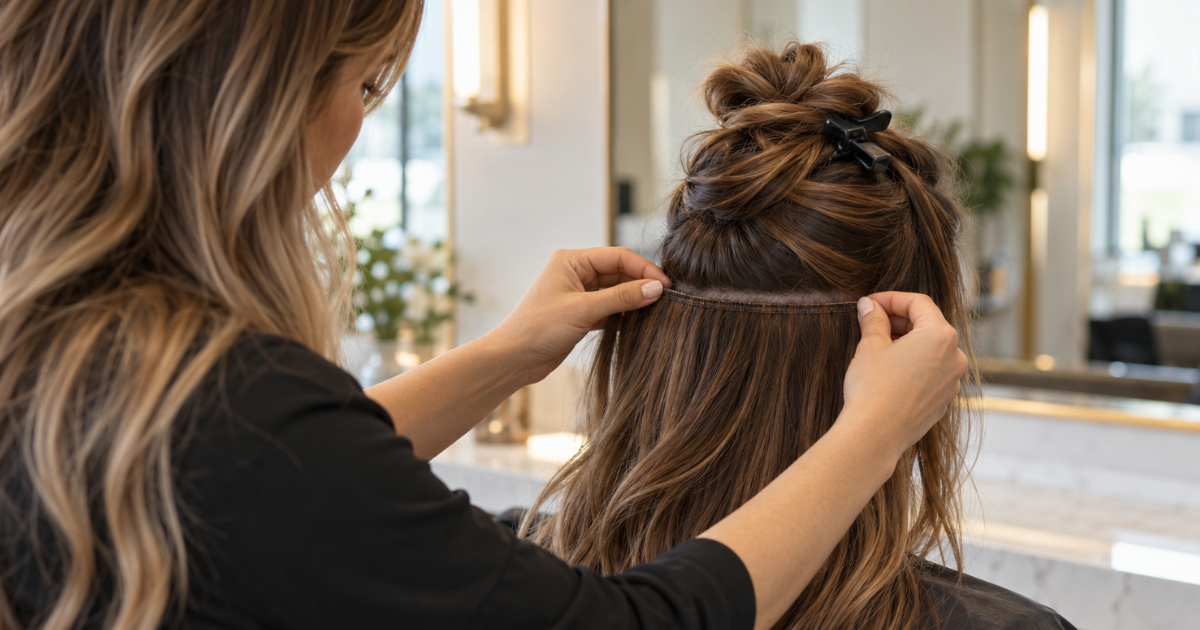
Rotate styles, avoid continuously stressing the same areas, and speak up if an installation feels painfully tight. Extensions should also be selected with the natural hair’s density and condition in mind rather than choosing maximum length or volume automatically.
Not every beauty experiment needs to begin with a major transformation. A lower-commitment version can reveal whether you enjoy the general direction.
This approach is especially useful when the trend differs dramatically from your usual look. You may discover that you love the tone but want less contrast, or enjoy the shape when styled but prefer additional length for versatility.
A productive inspiration folder contains more than photographs of celebrities with similar hairstyles. Include several examples that show the trend from different angles and under different lighting.
During the consultation, discuss:
Professional standards matter alongside creativity. New York licenses cosmetologists and appearance-enhancement businesses, and consumers can consult the state’s Appearance Enhancement Licensee Search when researching providers.
Timothy John's Salon NYC offers precision haircuts, styling, custom color, highlights, balayage, extensions, keratin services, and conditioning treatments at its Midtown Manhattan location.
That range allows a trend to be approached from several directions. Someone drawn to a brighter, more dimensional look may need strategic color rather than a complete transformation. Another person may achieve the movement in an inspiration image through a revised cut and styling technique.
The salon emphasizes individualized service and continued stylist education, both of which are useful when adapting a popular idea to different textures, starting points, and routines.
A stylist may recommend modifying or postponing a service when the hair is overly fragile, the expected maintenance conflicts with your routine, or the requested result cannot be reached safely in one visit. That is useful guidance, not a failure of creativity.
Persistent scalp burning, swelling, blistering, or a significant reaction after using a product should not be treated as ordinary beauty discomfort. The FDA provides information about allergens in cosmetics and signs of possible reactions. Seek appropriate medical care when symptoms are severe or concerning.
The best interpretation of a trend should pass a simple test:
Hair trends should open possibilities, not create pressure to reproduce an image exactly. Save the references that excite you, identify the details you truly love, and collaborate with a stylist on the version that belongs in your real life. That is usually the difference between a fleeting experiment and a look you cannot wait to wear.